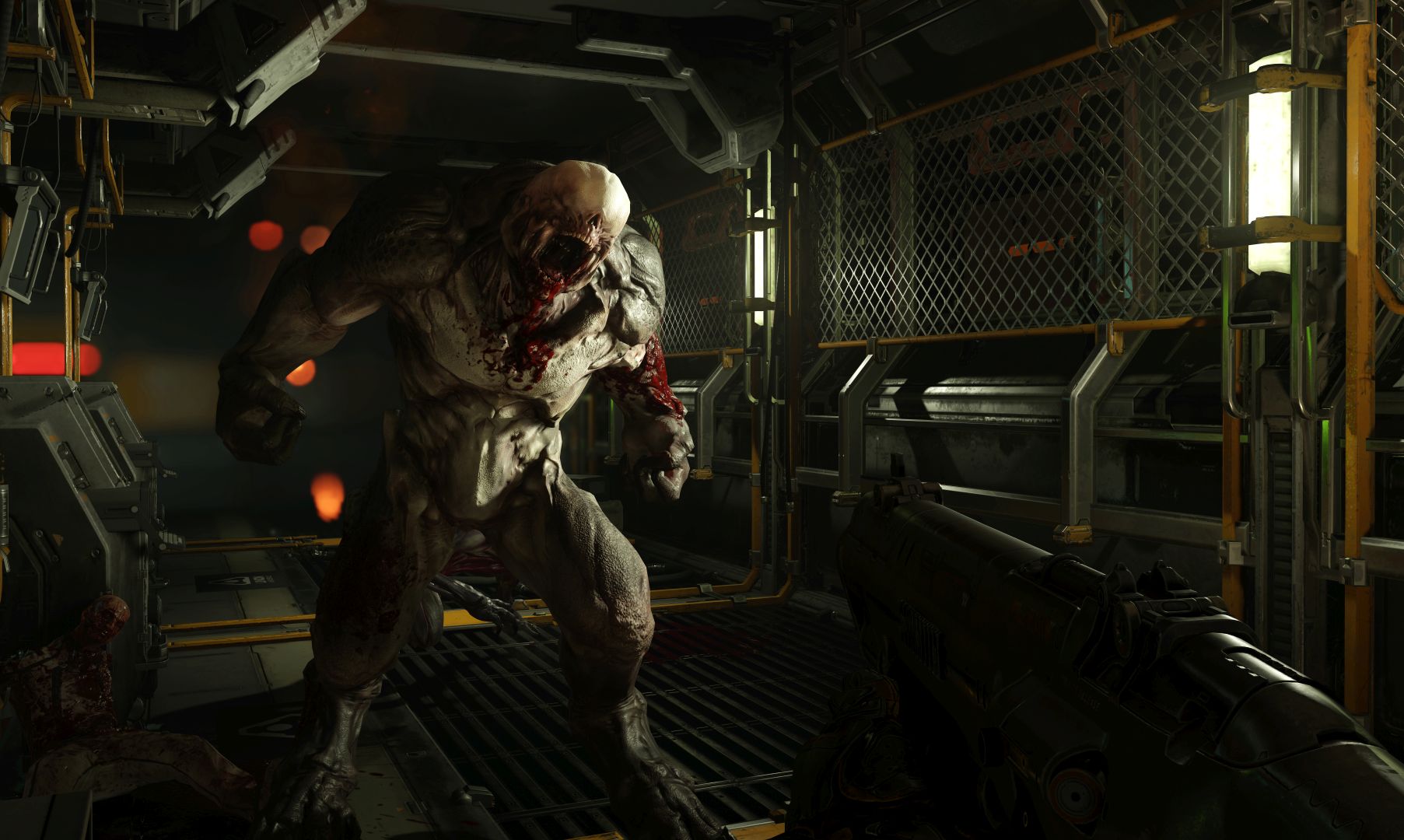
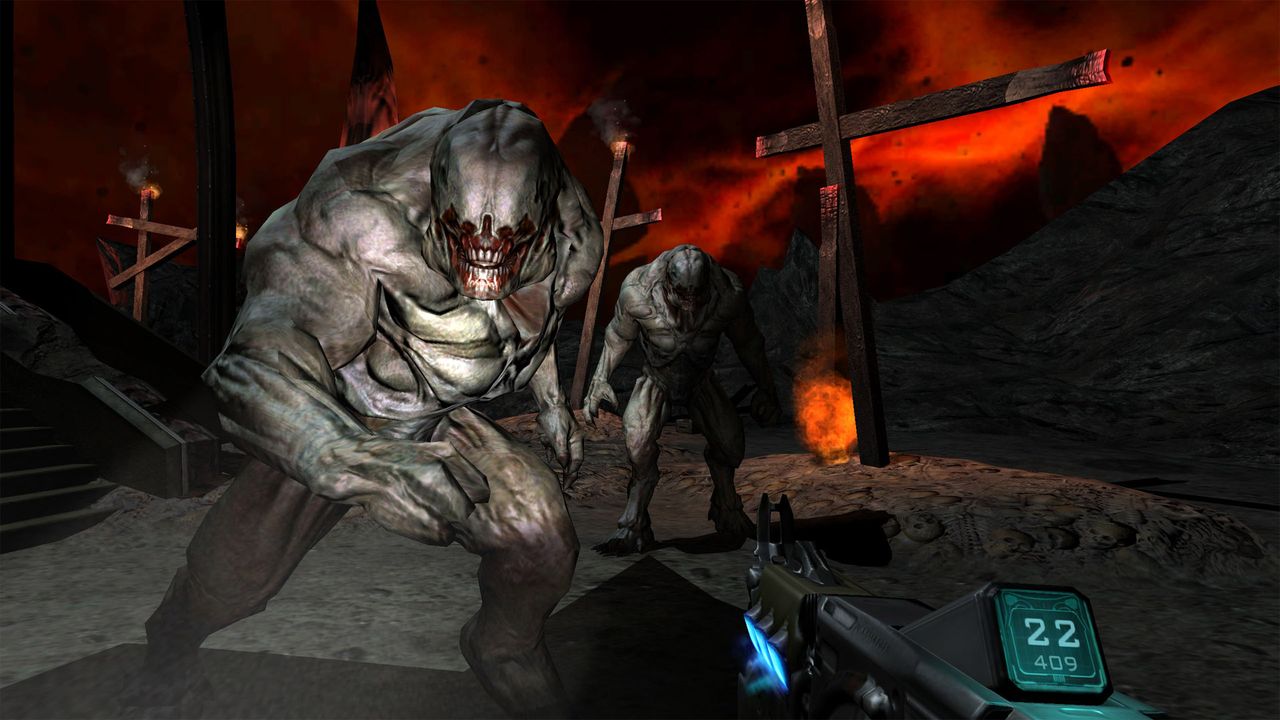
Following the development of DOOM 3, which wrapped in 2004, Id Software began plans for their next big titles. While John Carmack was interested in mobile game development through titles like DOOM RPG and Orcs & Elves, as well as the development of the studio's next generation engine, early work began on an action horror game in the style of DOOM 3 under the working title DARKNESS. This project ended up not going anywhere, possibly due to the backlash against DOOM 3's use of pitch black environments making Id not wish to make another game with that same style. Work instead began on the flagship title for the next generation engine, idTech 5. The game would eventually be titled RAGE and while a lot of DOOM 3 design philosophy remained, the game and its engine was the polar-opposite so far as lighting environments was concerned with the cold hallways drenched in shadow being replaced with large open post-apocalyptic environments lit in broad daylight. With DARKNESS scrapped and RAGE now fully into productions, talk began at Id about creating a secondary dev team to start work on their next title. This team would be a mix of veteran developers and new hires and the game they decided to take on was the next DOOM title.
The core concept behind DOOM 4 was decided on very early. DOOM 3 had been a modern reimagining of the original DOOM, so DOOM 4 would be a reimagining of the sequel, DOOM II: Hell on Earth. It was not a sequel to DOOM 3, nor a direct retelling of the events of the 1994 title, but rather taking the concept of hell invading Earth and putting a new spin on it. The far future of past DOOM titles was walked back to be closer to a contemporary setting and in addition to the conflict between humans demons there was a decision to also have an additional narrative hook of a civilian uprising fighting against the military. Giving DOOM 4 a more gritty "urban combat" look while retaining the general themes and concepts resulted in an asethetic that different a lot from past DOOM titles, which was the goal of the project. The setting of the game was a near-future New York City torn apart by a portal to Hell making the city gradually transform into bone, muscle and flesh, all while demons poured out and humans turned into monsters. The game drew inspiration from current military shooters, such as Call of Duty 2 and Gears of War, when it came to the presentation and gameplay updates. Much like how DOOM 3 had been a direct response to 1998's Half-Life, DOOM 4 would be a response to the games of the mid-2000s. Unfortunately, the game's intent became its first issue. As the early work began on DOOM 4, Infinity Ward released Call of Duty 4: Modern Warfare, a landmark title that changed the entire first person shooter market for years to come. With DOOM 4 still years away from completion it now ran into the inevitable issue of being compared to Call of Duty 4 and being seen as another game hopping on the "modern combat" bandwagon that had already become tired before the decade ended. However, Id decided to stick to their guns and kept working on the project.
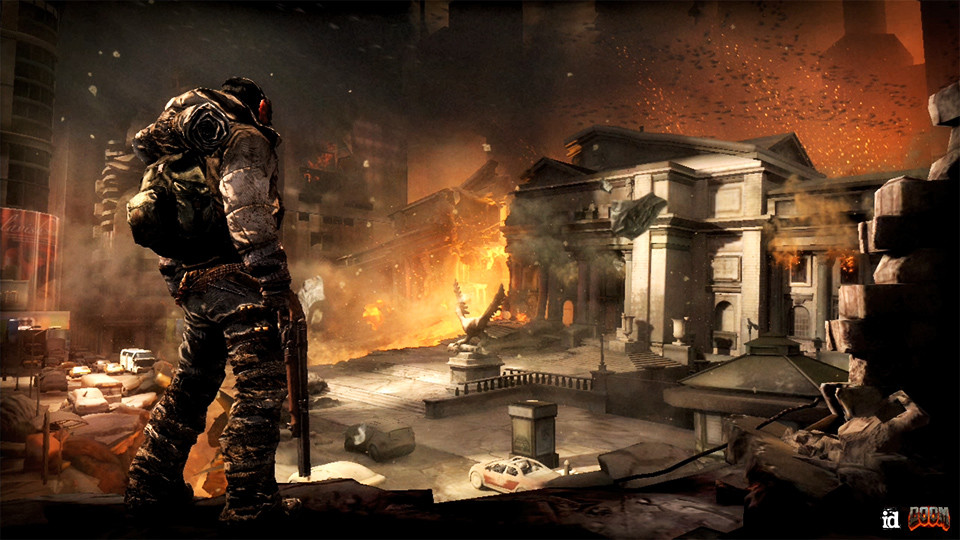
In 2009, Zenimax acquired Id Software. What followed was a lot of restructuring at the studio and new heads making calls. It's not quite clear exactly how things went down, but it appears that during this time both RAGE and DOOM 4 were heavily influenced by what Zenimax wanted each game to be. This resulted in DOOM 4 going through some major changes to its presentation and tone. A planned E3 demonstration of the "Ashes" level, a vertical slice demonstration of the opening section of the game, in either 2009 or 2010 was pushed up and ultimately never happened. The focus on a resistance group in a more contemporary setting was retooled so that the player was instead a hardened space marine, seemingly arriving on Earth from a space station, and rather than playing as an underdog in the fight against hell you were now playing as a powerhouse. This change was seemingly done to push back against the notion that DOOM 4 was going to be too much like the aforementioned Call of Duty. Ultimately it didn't matter as DOOM 4 alongside RAGE 2 were both cancelled after Id Software's annual christmas party in 2012 where the final, and to date only found, trailer of the game was shown.
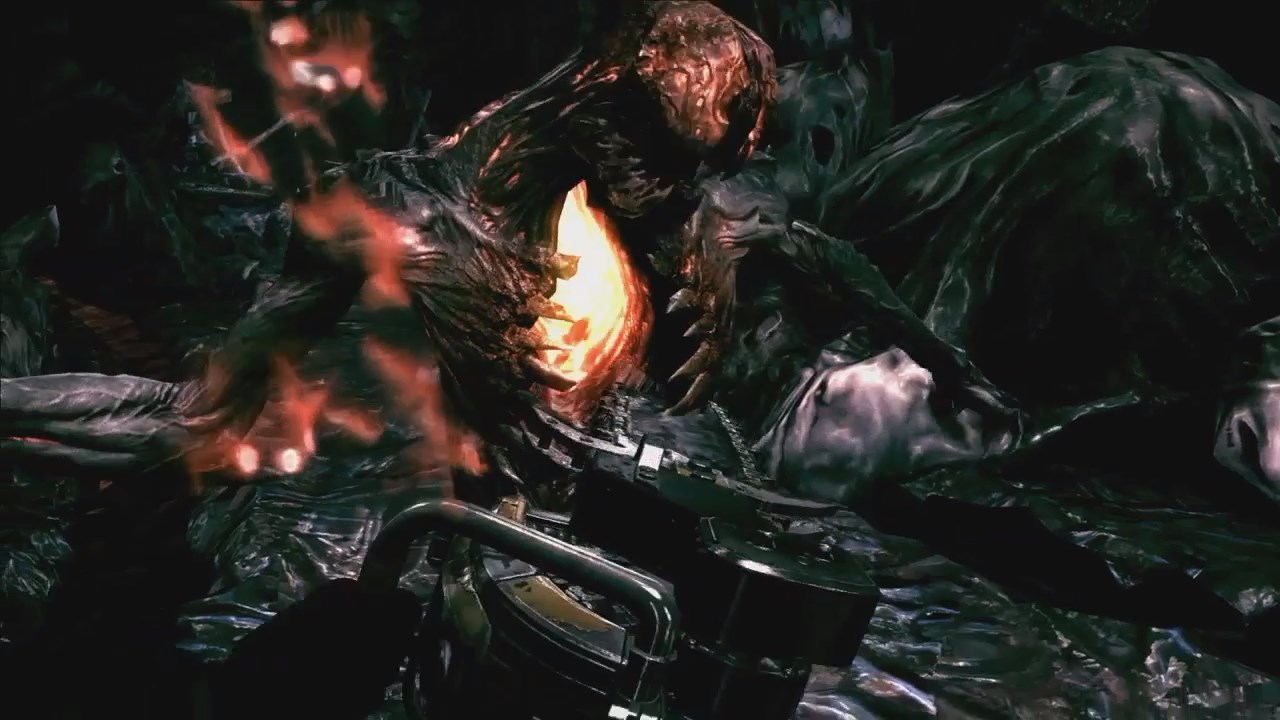
Zenimax wanted another DOOM, but DOOM 4 was dead. The job within Id Software became to support the development of MachineGames' upcoming Wolfenstein: The New Order and figure out just what to do with DOOM, so an internal pitch contest was held to present a direction DOOM could go. One of these pitches was "HOPE", presented through a storyboard called Faith and Fury, where "Id Guy" would be helped by the "Spirit of the Earth" to fight the hordes of Hell hiding within the modern world. The winning pitch was a CG animation building off DOOM 4's "sync melee" system. A fluid and snappy way to pull off executions on monsters without interrupting general gunplay, which became the foundation for DOOM (2016)'s glory kill system. The setting was reverted back to Mars and the project was now a full series reboot, and was later retooled into a sequel to the original 1990s DOOM games. Shortly after, level designer Thao Le and cinematic director and storyboarder Mark Bristol put out a lot of DOOM 4 images and footage as part of their portfolio. They were no longer working on the future of DOOM, as much of the DOOM 4 team did not transition into the DOOM (2016) team, so updating the portfolio was just a normal procedure. However, it appears this was not something Zenimax was fond of as they were forced to take down some of the media very quickly afterwards, but by then people had already seen it. What followed was a big media storm about the first look at DOOM 4. However, there was a clear problem. None of the screenshots or footage showed any demons, shooting, or anything at all that made people think of DOOM. This was intentional as the point of the work was to show off level design assets and animations in a CGI showreel, but people were quick to label DOOM 4 a terrible betrayal of the series which resulted in Zenimax and Id Software making a public statement that the DOOM 4 seen in this work was long dead and did not reflect the current project. After that, DOOM 4 was synonymous with being a mistake and it would take many years before other people who worked on it felt ready to share their work on it.